SEO for bankruptcy lawyers, built to win the local call.
Someone facing a garnishment searches for a lawyer nearby. We put your firm where that search lands: on the Map, in the results and in Google’s AI answers.

What could Google bring your bankruptcy practice, and what would it cost?
Send your website. Fahim sends back the searches worth winning in your market and your monthly price, in writing.
Thanks. Fahim has your note.
Your plan and price come by email within an hour in business hours. To talk sooner, book the call.
Prefer a call? Get your plan and price

Fahim answers within an hour in business hours.
Our clients include




The searches that come before a bankruptcy call.
Urgent bankruptcy searches end the same way, with a tap on the call button.
best bankruptcy attorney near me
can a lawyer stop a garnishment
how much does a lawyer charge for chapter 7
can i file chapter 7 without a lawyer
do i need a lawyer for debt collection
We do SEO for bankruptcy lawyers by meeting people at the moment debt turns into a garnishment, a lawsuit or a sale date, with a page for each problem and a Google profile ready for the urgent local call. What matters most is that every page says only what your counsel has cleared, because bankruptcy ads carry a federal statement and federal limits on what they may promise.
SEO for bankruptcy lawyers begins with the problem people search
People rarely search for a chapter. They search for the trouble in front of them: a garnished paycheck, papers from a collection lawsuit, a date for a foreclosure sale. Chapter 7 or Chapter 13 is the lawyer’s answer, so a bankruptcy site meets people at the problem first.
Most search from a phone, in private and in a hurry. Some want a lawyer nearby today, and the Map answers them. Others want to know whether they need a lawyer at all.
See how we decide which problems get pages
For each search we list who ranks, what the top pages cover and what all of them leave out. On our injury accounts, those gaps turned into whole sections of new pages. For bankruptcy, the gaps worth filling are local: what your state lets a person keep, how your district runs a case and where the meeting with creditors is held.
Some pairs of searches might need one page or two, such as a garnishment page and the Chapter 7 page. We test the pair in a handful of big cities. Where the results mostly differ, each search earns its own page; where they match, the problem becomes a section of the chapter page, so no page simply repeats another.
People sent by an accountant or a tax adviser look the firm up by name before calling, and our guide to winning clients as a lawyer weighs referrals against search.
The urgent call often comes from the Map
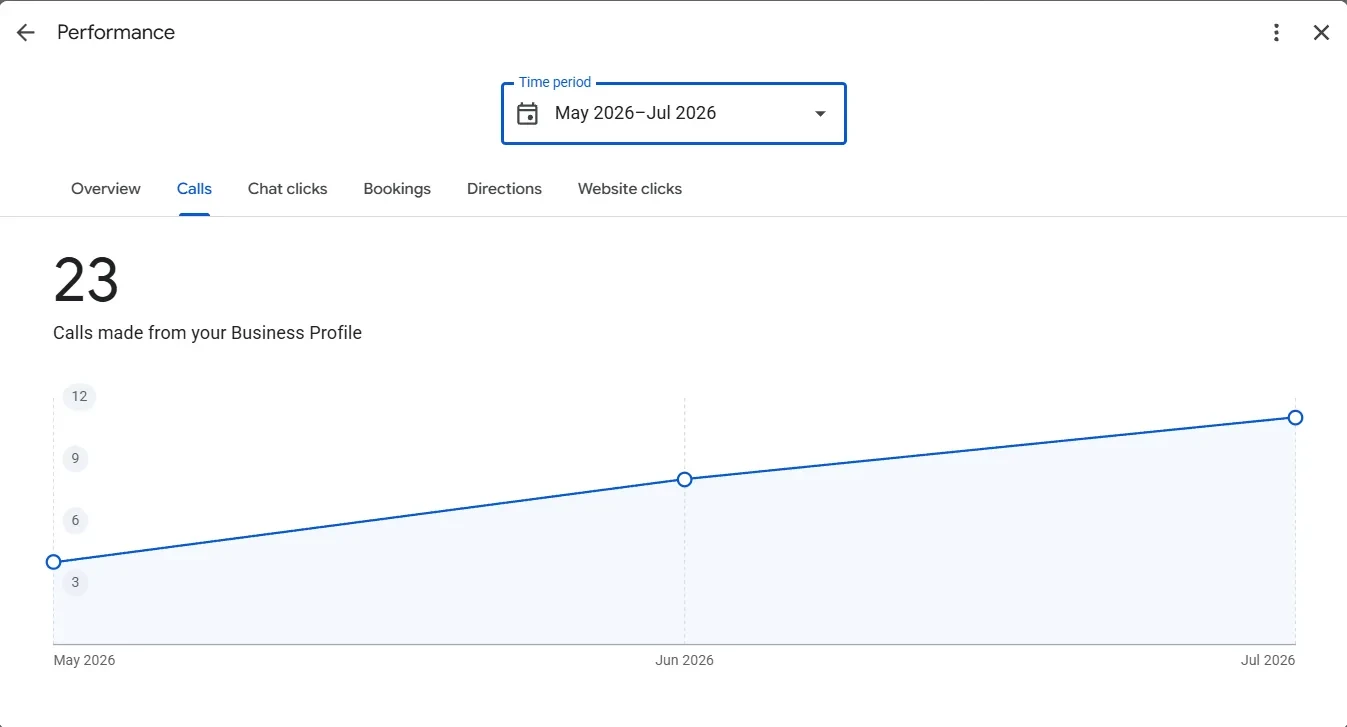
Someone facing a garnishment often calls straight from the Map, so the Google profile matters as much as the pages. Take a PI firm in El Paso. In the six months before we began, its Business Profile brought 9 calls, by Google’s own count. Over May, June and July 2026, it brought 23.
The groundwork behind that is what a bankruptcy firm needs too: one correct name, address and phone everywhere, a profile service for each kind of case the firm takes, and pages for the profile to point to.
Profiles follow real offices. Under Google’s guidelines, each real location gets one profile and a virtual office gets none, so a second district needs a staffed office before it gets a profile.
See how we clean up listings and numbers
A new profile starts near zero. A newer profile for our New Orleans injury client shows what that looks like: about 1 call in July 2026, then 9 by October.
We audit about 30 directories, then go back to the ones that turn automated tools away. Every duplicate is claimed and merged into one listing per office.
Phone numbers follow one rule. The office’s own local number is the one in the page code, the schema and the directories, and a tracking number appears only as the profile’s primary number, with the local one listed second. On one injury account, directory sites had copied a tracking number off the profile and spread it as the firm’s phone.
Each problem the firm handles is added to the profile under the same words as its page. Debt settlement or business cases stay off unless the firm really does that work.
The bankruptcy site we build, in order
We have only ever had injury accounts, so read each example below as injury work carried over. For the first 90 days in full, see law firm SEO services; the steps below are where bankruptcy work differs.
- The firm’s lines, and its counsel’s statement.
- Every figure checked against its effective date.
- A page per chapter and per problem the firm takes.
- Local pages that follow the districts.
- Claims read the way we read fee lines.
See how each step works for bankruptcy
- The firm answers our setup questions once: the chapters it files, the problems it takes, its fee wording and the work it sends elsewhere. Its counsel then decides where the debt relief agency statement under 11 U.S.C. 528 belongs, and we build the approved wording into the page template, so each new problem page carries it from its first day.
- Bankruptcy runs on figures that change on set dates, from means test numbers to court fees. We read each one at its official source and note the date it took effect. Even official pages can disagree: when we checked in November 2026, the US Courts guide to Chapter 7 and the courts’ fee schedule gave different administrative fees. So a fee page links the schedule instead of copying a total.
- Chapter 7 and Chapter 13 each get a page, and so does each problem the firm wants calls for, such as garnishment, foreclosure or a collection lawsuit. One page owns each topic, and the others sum it up and link to it. Work the firm refers out is explained as a boundary, never offered. Debts tied to a divorce are a common case: who keeps which debt is a family lawyer’s question, and SEO for family lawyers covers that side.
- Cases are filed by federal district, so local pages follow the districts and divisions the firm files in, not a list of suburbs. Courthouses and meeting locations are named in full, every one in the district, or not at all.
- Louisiana’s bar rules make an injury firm’s “no fee unless you win” line say whether the client still pays case costs, which we learned by reading the bar’s own rules. A “free consultation” or flat-fee line gets the same reading under your state’s rules. Federal law also bars misleading anyone about what filing can do, so “wipe out all your debt” never runs: some debts survive a discharge.
Answering the questions national guides hold
Before calling anyone, many people ask whether they need a lawyer at all. When we checked can i file chapter 7 without a lawyer
in November 2026, national legal guides and a news site held the top results.
A local firm won’t out-write them on the general answer. It wins the local version: the exemptions in its state, its district’s own rules and the real steps of a case there.
Those local lines are what Google’s AI tends to quote. On our injury pages it picked out the deadline, the warning about the insurer and the named highways, never “call us today”.
See how we watch AI answers on debt
Every month we note how Google’s AI answers the firm’s key debt questions and whose pages it cites. That record shows what Google displays, and it is never a source. Where an answer has the law wrong, the statute settles it, and a correct page is the opening.
In El Paso, Google’s AI answer to a question about the deadline for car accident claims cited our injury client’s page before any other. On a bankruptcy site, the page to build is a dated answer on your state’s exemptions or the means test, with its source linked.
How soon do calls come, and how do we count them?
New pages can’t rank fast until roughly three months of groundwork are behind them. After that, the competition in your districts and the state of your site set the pace, and Fahim’s view of it is an estimate, not a promise.
We count answered calls and qualified leads chapter by chapter, compared with the same stretch a year earlier. A tap on the number only shows someone tried; an answered call is what goes in the count.
The chapter split matters because the money arrives differently. A Chapter 13 fee is approved by the court and often paid through the plan, so a Chapter 13 lead isn’t worth what a Chapter 7 lead is in its first month.
See how the form sorts an urgent lead
Each chapter or problem page sends its case type with the form, so nobody is asked what they already chose. The Chapter 13 and foreclosure pages ask one thing more, the sale date, since a near date means a faster callback.
The name and number are saved before any other question, so someone who stops halfway still reaches the firm. People with a real case go on to answer the rest, and bots stop at the first step, which tells the intake team whom to call first.
What bankruptcy SEO costs
The monthly figure comes from your market, the chapters and problems you want calls for, your offices and where your site stands now. How each one changes the figure is set out on law firm SEO pricing. Should you stop, the firm keeps the site and every page.
The Map, the pages and the calls, in one price.
One fee, from $2,000 a month, buys everything ranking takes: the profile and reviews, the pages, upkeep of the site, links, tracking for every call and form, and a monthly look at AI answers.
There is no setup fee and no minimum term, and the number comes in writing before any work.
Bankruptcy SEO, asked and answered.
Have you worked with bankruptcy firms?
Not yet. We work for two injury firms, and the results shown here are theirs: one firm is in New Orleans, the other in El Paso. What transfers is the urgent local call: the profile, a page per problem, the form and the way we count what arrives.
Should we publish our Chapter 7 fee?
If the lawyer agrees, a fee page answers a search that sits close to the call, so callers already know the number. The fee goes up in the firm’s approved wording, filing costs link to the court’s own schedule, and the page explains that a Chapter 13 fee goes through the court.
Can our site reach people who were just sued by a debt collector?
A public page that answers their question is advertising, and it can rank for them. A letter or text to a named person who was just sued is solicitation, which most states regulate separately. We give marketing guidance here, not legal advice, so check with your ethics counsel before anything is sent.
Can our pages say we are board certified?
Only when it’s true, and in the form your state’s rule allows, which usually means naming the certifying body. We check every certification, membership and award with its issuer before it appears, because a badge that claims too much is a risk to the lawyer.
Do you work with insolvency firms outside the US?
Rarely on consumer cases, because in England and Wales and in Canada that work runs through a government official or a licensed trustee, not a law firm’s filing. This plan is for US bankruptcy firms. Firms abroad can still hire us remotely for their other practice areas.
Put a number on more Chapter 7 and Chapter 13 calls, district by district.
In 30 minutes, Fahim runs your Chapter 7 and Chapter 13 searches for each district with you and shows who takes those calls today.
S. M. Fahim Leads every account and is on every call.

Josh Henderson Texas attorney since 2008. Joins calls with firms.
Prefer to write? Send your website
Loading Fahim’s calendar
It takes a few seconds.
Open Fahim’s calendar on Calendly
Or send your website, and Fahim writes back within an hour in business hours.